




Children learn with their whole bodies. Long before they can write their name or explain a big idea, they are learning by reaching, rolling, crawling, climbing, running, balancing, dancing, digging and carrying.
These large-body movements are called gross motor skills. They use the bigger muscles in the arms, legs and core, and they help children move through the world with growing confidence.
Gross motor development is not a race. Children develop at different rates, and their confidence can change with age, temperament, health, sleep, environment and opportunity. But one thing is steady: children need regular chances to move their bodies in safe, playful and meaningful ways.
What are gross motor skills?
Gross motor skills are the movements children use for whole-body action. They include skills such as:
- Lifting the head.
- Rolling.
- Sitting.
- Crawling.
- Pulling to stand.
- Walking.
- Running.
- Jumping.
- Climbing.
- Balancing.
- Throwing, catching and kicking.
- Pedalling, scootering or riding.
These skills support more than physical strength. Movement helps children build body awareness, confidence, independence and social participation. A child who can climb, balance, run, carry and coordinate their body can often join more games, solve more practical problems and explore more of their environment.
Why movement matters in the early years
Active play gives children the chance to practise balance, coordination, strength and spatial awareness. It can also support:
- Confidence: “I can try this.”
- Persistence: “I fell, but I can try again.”
- Independence: “I can climb, carry, pour, pack away or put on my shoes.”
- Social skills: “I can join the game.”
- Self-regulation: “I can use my body, then rest.”
- Fine motor readiness: strong shoulders, core and posture can support later hand skills such as drawing, cutting and writing.
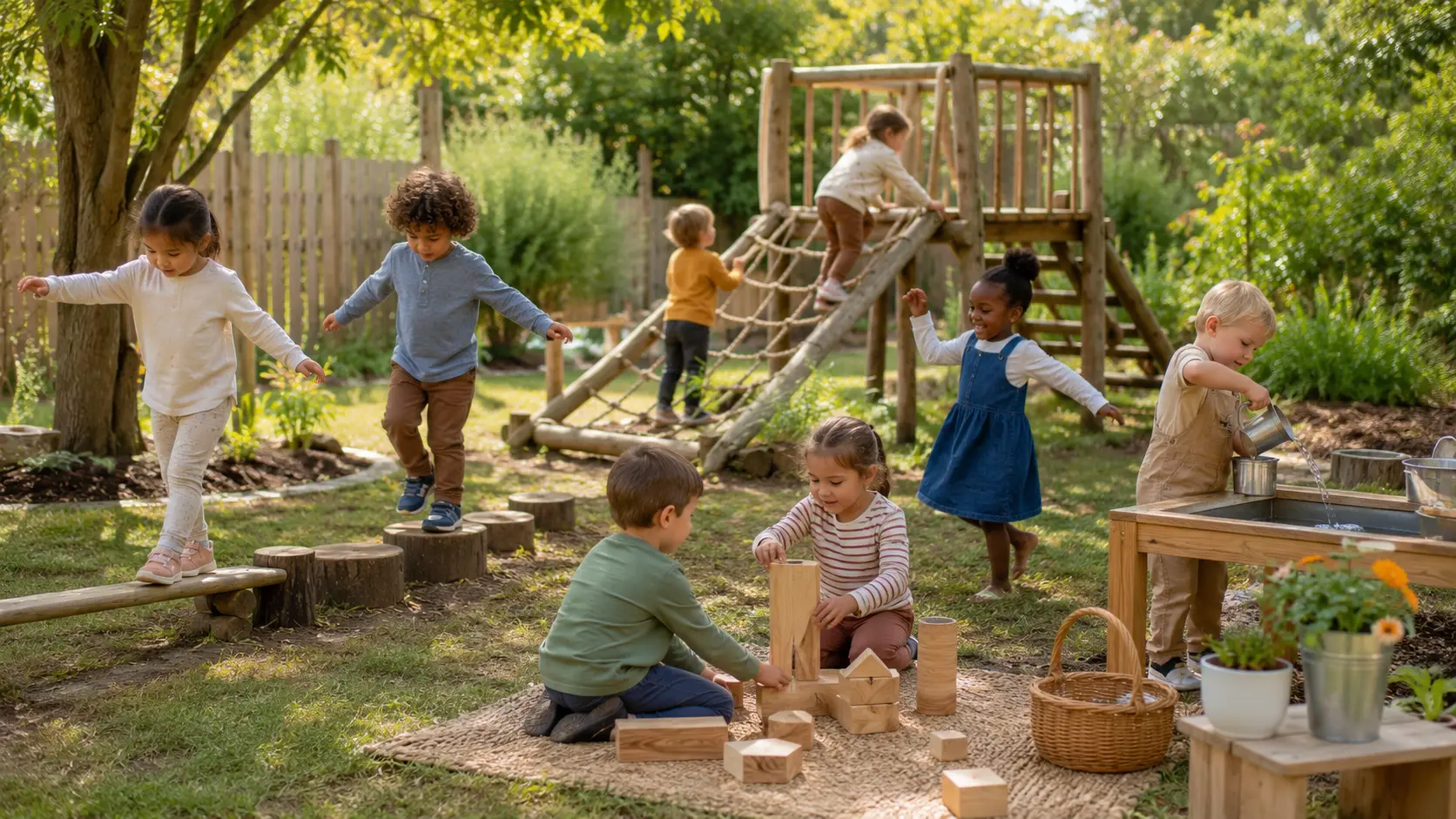
In early learning settings, movement is often woven through play rather than kept separate as “exercise”. Children might strengthen their bodies by moving large blocks, sweeping, gardening, balancing outdoors, climbing safely, dancing, carrying baskets, rolling balls, building obstacle paths or joining group games.
Birth to 12 months: floor time, reaching and early strength
In the first year, babies are learning the foundations of movement. They begin to lift their heads, turn, reach, roll, sit, crawl or move in their own way, and pull towards standing when they are ready.
Simple ideas families can try:
- Offer short, supervised tummy-time sessions while your baby is awake.
- Place interesting toys just within reach to encourage looking, reaching and turning.
- Give your baby safe floor time with room to kick, stretch and move.
- Sing action songs with gentle clapping, bicycle legs or supported bouncing.
- Let your baby practise reaching across the body for a toy.
- Reduce long stretches in carriers, prams or seats when your baby is awake and ready to move.
Keep it gentle. Some babies enjoy tummy time in short bursts at first. A rolled towel under the chest, a familiar face on the floor, or a favourite toy can help make it feel more comfortable.
1 to 3 years: walking, climbing, pushing and exploring
Toddlers are built for movement. They often want to walk, run, carry, climb, push, pull, dance, tip, pour and test what their bodies can do.
Simple ideas families can try:
- Visit playgrounds with age-appropriate climbing, sliding and balancing options.
- Roll, kick and throw soft balls.
- Create a cushion or cardboard-box obstacle path.
- Dance to music and copy each other’s movements.
- Let your child carry light groceries, push a toy pram or pull a wagon.
- Practise stepping over lines, walking around cones or balancing along a low, safe edge.
- Spend time outdoors on grass, sand, paths and other safe surfaces.
At this age, movement is often how toddlers investigate the world. The goal is not neat performance. It is repeated practice, safe challenge and joyful exploration.
3 to 5 years: balance, coordination and confidence
Preschool and kindergarten-age children often become more coordinated and interested in games with rules, roles and challenges. They may enjoy jumping, hopping, balancing, pedalling, climbing, running, throwing, catching and pretend-play movement.
Simple ideas families can try:
- Play follow-the-leader with animal walks, big steps and tiny steps.
- Draw hopscotch with chalk.
- Practise jumping from two feet and landing safely.
- Throw beanbags into a basket.
- Kick a ball towards a target.
- Ride a balance bike, trike or scooter with suitable safety gear.
- Build backyard obstacle courses with tunnels, stepping stones and low balance paths.
- Play stop-and-go games, such as musical statues or traffic lights.
This is a lovely age for encouraging effort rather than comparison. Instead of “you’re the best runner”, try “you kept trying until you found your balance”. That kind of language helps children notice persistence, not just performance.
5 to 8 years: skill, rhythm and active habits
As children move into the early school years, their movement often becomes more controlled and coordinated. Many enjoy games with teams, rules, rhythm, challenge or a clear goal.
Simple ideas families can try:
- Go on family walks, bike rides or nature adventures.
- Play tag, soccer, skipping, handball or simple chasing games.
- Practise throwing and catching with different-sized balls.
- Try climbing, balancing, dancing, gymnastics-style movement or swimming where safe and supervised.
- Encourage active transport where practical, such as walking or riding part of the way.
- Let children help with active household jobs, such as gardening, sweeping or carrying light items.
Not every child loves organised sport, and they do not need to. Active habits can grow through play, daily routines, outdoor time, family movement and activities that match a child’s interests.
Everyday movement ideas that do not need special equipment
Gross motor development does not require expensive equipment or formal classes. Some of the best movement opportunities are ordinary:
- Walk on a line of tape.
- Step from cushion to cushion.
- Crawl through a blanket tunnel.
- Dance while packing away toys.
- Carry soft toys from one room to another.
- Throw rolled-up socks into a laundry basket.
- Balance on one foot while brushing teeth.
- Pretend to move like animals.
- Sweep leaves, water plants or dig in a garden bed.
- Build with large boxes.
Small moments count because children learn through repetition. A few minutes of movement, many times across the day, can be more realistic for families than a single structured activity.
How early learning environments can support movement
Good early learning environments give children space, time and encouragement to move. Educators can support physical development by:
- Offering indoor and outdoor play.
- Providing age-appropriate challenge.
- Noticing each child’s confidence and readiness.
- Encouraging climbing, balancing, carrying, building, dancing and active games.
- Helping children take safe risks, such as trying a low balance beam or climbing structure.
- Offering practical tasks that build independence and coordination.
When to ask for extra support
Children develop in different ways, but it is worth seeking advice if you are concerned about your child’s movement, coordination, strength, pain or confidence.
Consider speaking with your GP, maternal and child health nurse, paediatrician, physiotherapist or another qualified health professional if:
- Your child loses a skill they previously had.
- One side of the body seems much stronger or more coordinated than the other.
- Movement seems painful or unusually tiring.
- Your child regularly avoids movement because it feels hard or upsetting.
- You have ongoing concerns about sitting, crawling, walking, running, jumping, balance or coordination.
Early advice can be reassuring, and it can help families understand what is typical variation and what might need support