









You have read the same book so often that you could probably recite it while making dinner. Your child still wants it again. Then, halfway through, they skip three pages and announce that the dog needs a sandwich.
That slightly chaotic exchange can be a lovely literacy moment. Your child is taking an interest in a book, noticing a character and adding an idea. There is room for all of that, even when the story does not go to plan.
Early literacy includes discovering what books do, enjoying the sounds in words and learning that marks can carry a message. For young children, a warm invitation is a useful place to begin.
Let the book become a shared experience
Choose a comfortable time when neither of you is rushing. It might be after breakfast, beside the afternoon snack or during a quiet stretch before bed. Keep a few sturdy, age-appropriate books where your child can reach them.
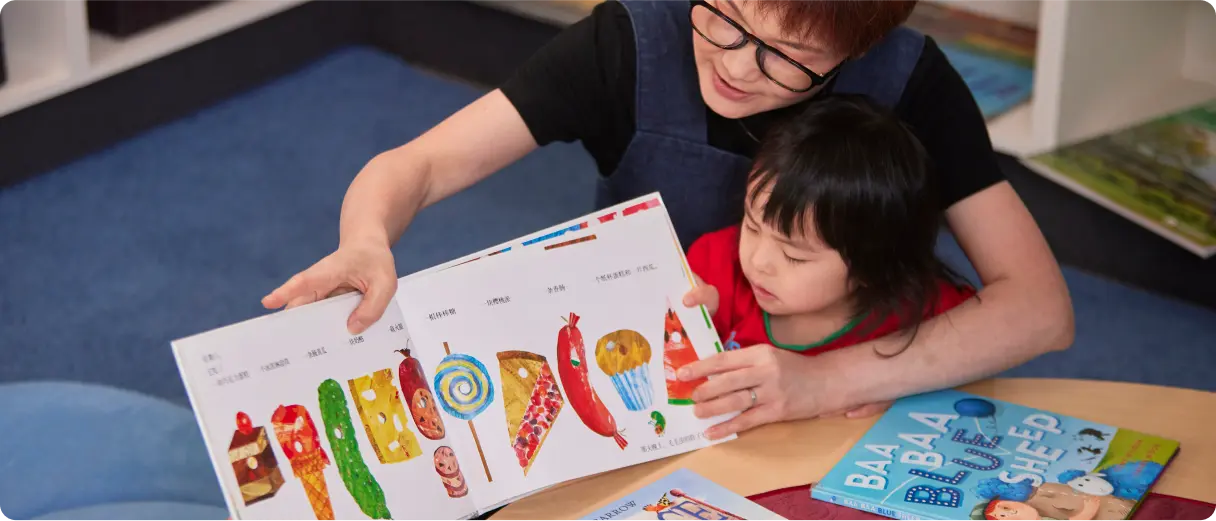
You can read the words, talk about a picture or follow your child’s finger across the page. The Victorian Government’s early childhood literacy guidance describes shared reading as an opportunity to explore meaning together. You do not need to finish every book.
Try giving a familiar story a different small focus on different days:
- Notice the background. Perhaps a tiny bird appears on several pages.
- Let your child choose a voice for one character.
- Pause at an interesting picture and share something you notice.
- Revisit a surprising moment, then let your child turn back to check it.
A comment can be more inviting than another question. “That umbrella is much bigger than the mouse” leaves space for a giggle, a gesture or a whole new story.
Make room for your child’s version
After reading, leave a soft toy near the book. Your child might decide that the toy is the main character and send it on a different adventure. You can join in by asking where it should go next, then follow their answer.
For a simple family storytelling game, each person adds one event to an imaginary outing. Perhaps you go to the park, find a purple boot and discover a very polite dragon looking for it. The plot can wander. Taking pleasure in making a story together matters more than keeping it tidy.
If your child prefers looking quietly, let that count too. Participation does not always look like talking.
Play with the sound of words
Rhymes and songs give children chances to notice repeated sounds. Keep it light: a silly rhyme during shoe time can be enough. You might invent a tiny song about a sock that has gone for a walk, or stretch a familiar name into a playful rhythm.
Older preschoolers may enjoy inventing a rhyming name for a toy or tapping the beats in a family member’s name. Join in yourself and happily get things wrong. This is an invitation to listen and experiment, without scores or corrections.
Give writing an everyday purpose
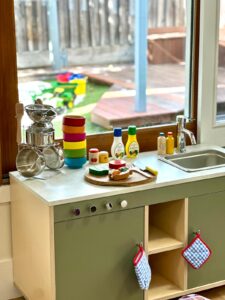
A child who fills a page with loops and says “This is the menu” has an idea about what writing can do. Ask what is on the menu, and accept the answer. If they want your help, write their words on a separate piece of paper so their work remains their own.
You could make a sign for a block building, draw a reminder to return a library book or leave a picture message for someone arriving home. Provide age-appropriate drawing tools and supervise their use. Writing becomes meaningful when it belongs to something your child cares about.
Keep the invitation welcoming
Books about diggers, familiar animals, family celebrations or everyday routines may spark interest. Offer stories in your family’s languages and books that reflect different families and experiences. Your local library can help you explore without buying a new collection.
If a day is too full for a book, tomorrow is another chance. A child does not need a perfect reading routine or early independent reading to belong in the world of stories.
Helpful reading
To explore the next chapter in your child’s early learning, take a look at Little Lane programs or get in touch with our team.