









All the soft toys have moved into the hallway again. Yesterday they travelled in a basket. Today your child is carrying them one at a time, with the seriousness of someone organising a very important move.
Repeated play can puzzle adults. We might wonder whether a child is bored, being difficult or ready for a different activity. Sometimes they are deeply interested in the action itself.
Educators may call recurring patterns of exploration “play schemas”. The term offers one way to notice what a child is investigating. It is a lens for curiosity, rather than a label your child needs to fit.
Notice the action beneath the story
The story may change while the action stays similar. A child might carry toy food to a pretend kitchen, move blocks to a building site and deliver socks to a bedroom. Moving objects between places is the common thread.
You do not need to memorise a catalogue of schemas. Start by watching for a few minutes. What is your child repeating? What do they change? Do they appear interested, frustrated, comfortable or ready to stop?
The New Zealand Ministry of Education’s early childhood guidance describes these repeated actions as one way children explore and make sense of their surroundings. Your observations can help you choose a useful next invitation.
Common patterns you might recognise
Moving things from here to there
Often called transporting, this can involve repeated trips between two places. Offer a small basket without long straps and several lightweight, age-appropriate objects. Perhaps the clean washcloths need delivering from the laundry basket to a low shelf.
Watching things travel
Trajectory refers to movement through space, including rolling and dropping. A low, stable cardboard ramp and a large age-appropriate toy vehicle can provide a place to explore. Your child might change the starting point or build a wide parking area at the bottom.
Joining and separating
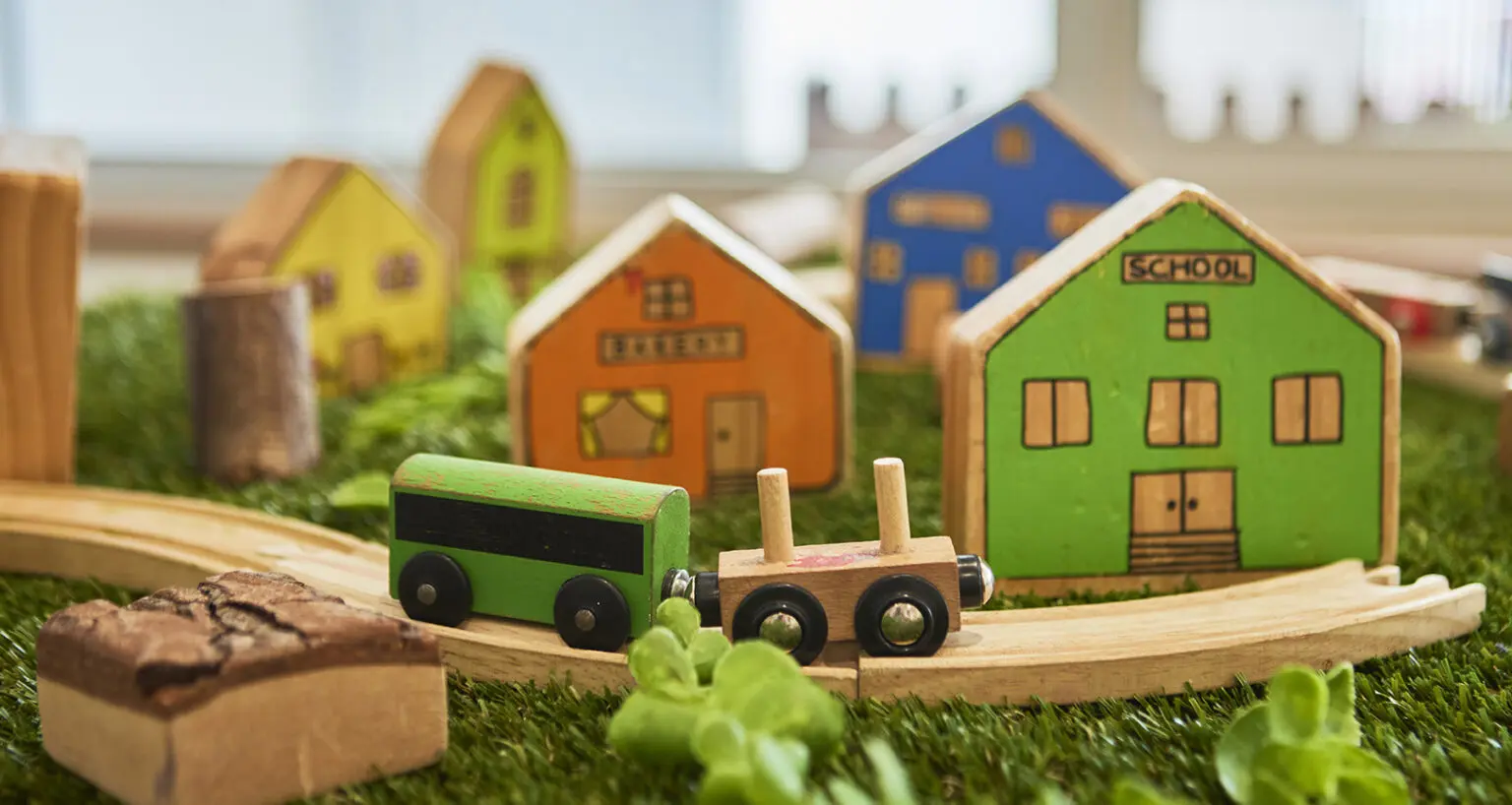
A connecting interest may appear in construction play. Offer age-appropriate interlocking blocks or large toy track pieces. A preschooler could try making a path between two pretend homes and then taking it apart for repairs.
Making boundaries
Some children repeatedly build around things, enclosing an area with blocks or arranging a border. A large soft toy might need a garden, a room or a place for visitors to wait. Let your child decide what belongs inside.
Turning or carefully arranging
A child may return to the turning wheels of a sturdy toy, or spend time positioning objects in a particular order. Respect the arrangement where practical. Before packing away, ask which parts can move and give notice that the space will soon be needed.
Keep the interest and change the unsafe action
Understanding a pattern does not mean permitting anything. If blocks are being thrown towards people, move close and stop the action: “I won’t let you throw blocks. We can roll this soft ball over here.”
Match the alternative to what seems interesting. A child repeatedly emptying a drawer might enjoy transferring safe large play materials between two open containers. Protect access to drawers holding tools, batteries or other hazards.
Check materials for choking, trapping, sharp-edge and entanglement risks. Small loose objects are unsuitable for children who mouth things, regardless of their age. Keep constructions low, use stable equipment and supervise actively.
Offer one change, then watch
You might add a second destination to a carrying game or a wider piece of cardboard to an existing ramp. Your child may accept the invitation, ignore it or invent something you had not considered.
There is no need to extend every moment. Repeating a familiar action can be satisfying on its own. It is also fine to finish when family routines require it: “Two more deliveries, then the basket rests while we have lunch.”
Share observations without making a diagnosis
Tell your child’s educators what you actually notice: “They have been filling and carrying this basket each afternoon.” That is more useful than deciding the behaviour proves a particular learning style or developmental condition.
A repeated action alone cannot diagnose or rule out a developmental concern. If you are worried about your child’s communication, flexibility, distress or loss of skills, discuss the broader picture with your GP or child health nurse.
Helpful reading
- New Zealand Ministry of Education: infant and toddler play
- ACECQA: resources that support learning through play
Your child’s current play interests are a lovely starting point for a conversation. Contact Little Lane or find a centre near you to talk about their next early learning experience.