





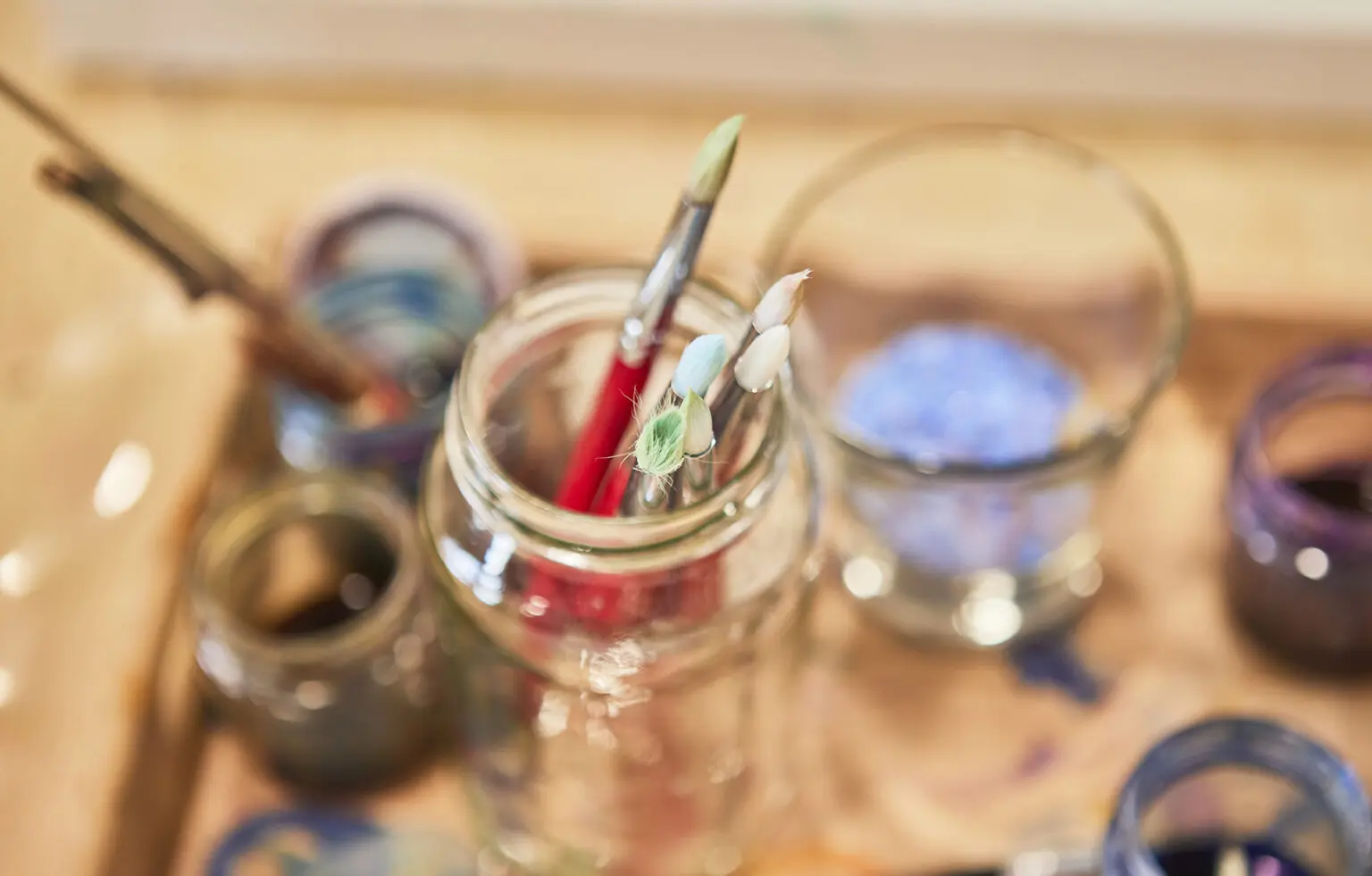
You put out yellow and blue paint. Your child mixes them enthusiastically, adds another colour and ends up with a page covered in brown. You nearly suggest starting again.
Then you notice how carefully they are watching the brush. They are exploring what happens when colours meet, how much paint the paper can hold and what their hand can make it do.
Children’s creative work can look quite different from the picture an adult imagined. Making room for that difference lets them take ownership of their ideas.
Ask what the experience offers
Some activities invite children to follow steps towards a particular result. Others offer materials and let the result emerge. Both can have a place, but a child benefits from regular chances to decide what to make and how to make it.
The Victorian Government’s early childhood arts guidance recognises drawing, painting and sculpture as ways children express ideas and make meaning. An artwork does not need a recognisable subject to be worth your attention.
Before setting something up, consider how many decisions remain for your child. Can they choose where to begin, when to stop or whether their creation needs another part?
Keep the starting point simple
A huge assortment can make choosing difficult. Offer one surface and two or three suitable tools. Paper with chunky crayons, cardboard with washable paint, or large paper pieces with age-appropriate glue can be plenty.
Set practical limits before beginning: “The paint stays on this tray. The bathroom is where we wash our hands.” Choose washable materials intended for your child’s age, supervise closely and keep small pieces away from children who mouth objects.
A manageable boundary makes it easier to relax while your child explores. You do not need to accept paint on the sofa to value creativity.
Three invitations with room for surprises
Make a page of movement
Put on a short piece of music and draw alongside each other. Your child might make long lines, little taps or a whirl of circles. Change to a quieter piece if they are interested and notice whether anything changes. There is no correct picture of a sound.
Build a paper landscape
Give a preschooler a large base sheet and broad strips of paper. Show on your own piece how a strip can bend or fold, then let them explore. A loop might become a tunnel, a tail or simply a satisfying shape. Offer help with glue when requested.
Draw somewhere imaginary
Invite your child to invent somewhere they would like to visit. It might have a slide into a library or a train driven by a cat. If they want you to join, draw your own place beside theirs. Avoid correcting the features that make their idea unusual.
Respond with interest, then leave space
It is natural to say “That’s beautiful”. You can also notice a specific choice: “You used the edge of the crayon there”, or “Those marks go right across the page”.
If your child wants to talk, try “Would you like to tell me about it?” Accept “no” as an answer. Sometimes the pleasure was in making, and an explanation is more work than they want to do.
Be careful about assigning feelings to colours or interpreting every picture. A page of dark paint might simply reflect the colour they enjoyed using. Let your child tell you what it means, if anything.
When frustration arrives
A child may be disappointed when a drawing does not match their idea. Acknowledge that: “You wanted it to stand up, and it keeps falling.” Offer a small practical choice, such as trying thicker card or taking a break.
If they ask you to draw something, you can demonstrate on a separate page or work together with their agreement. The aim is to be a helpful partner, without quietly replacing their work with yours.
Let children help choose what happens next
Ask which piece they would like to display, give away, photograph or reuse. A small rotating space on a shelf or wall can work well. You do not have to preserve every page.
Making, changing and sometimes starting again can all belong in a creative afternoon. What your child learns about their own ideas may last much longer than the painting on the fridge.
Helpful reading
For a closer look at early learning possibilities, browse Little Lane programs or contact us to discuss what your child enjoys creating.